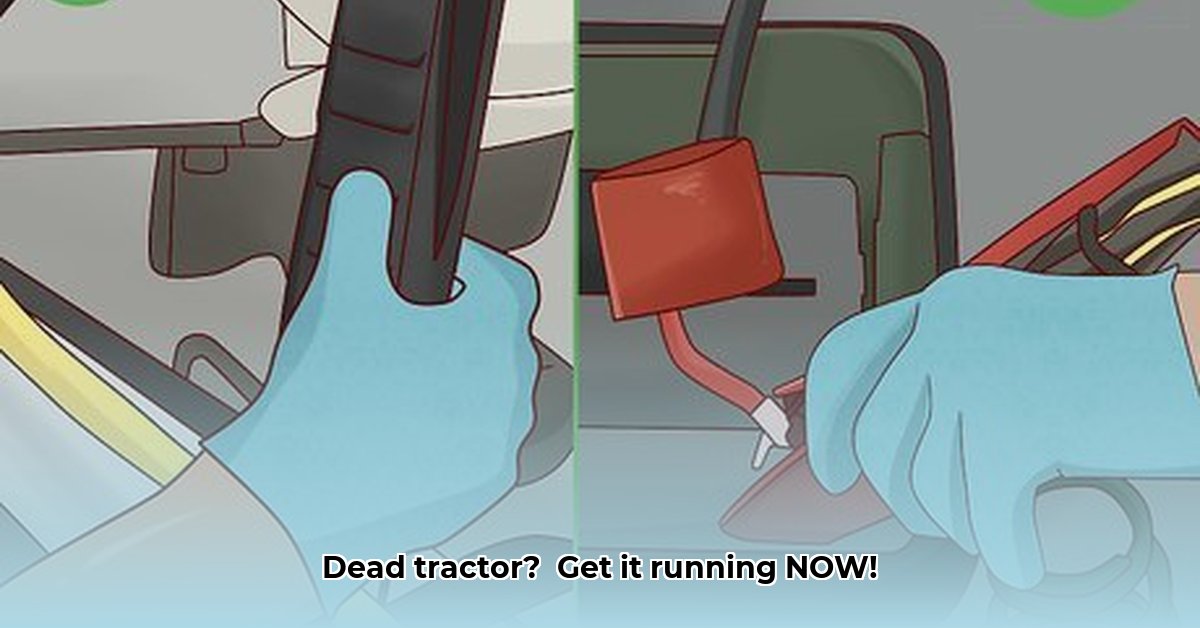
Jump-starting a tractor can seem daunting, but with the right steps and precautions, it's a manageable task. This guide provides clear instructions, addressing safety concerns and variations across tractor models to get you back to work quickly. For more on tractor maintenance, see our guide on changing a tire.
Is it Really a Dead Battery? Troubleshooting Before You Jump
Before grabbing jumper cables, let's rule out simple fixes. Are all lights and gauges completely off? If not, a loose battery terminal connection might be the culprit. Tighten the terminals securely; sometimes, that's all it takes. If the tractor still doesn't respond, proceed to the jump-start procedure. Have you considered the potential of a faulty alternator? A multimeter check can help determine if the battery is receiving a proper charge.
Gathering Your Supplies and Safety Gear
Successful jump-starting requires the right tools and a focus on safety. Here's what you'll need:
- Heavy-duty jumper cables: Choose cables rated for the high amperage of a tractor battery. Flimsy cables can overheat and fail.
- "Donor" vehicle: A vehicle with a strong battery and alternator—another tractor, a truck, or a car will all work. Ensure the donor vehicle has a higher amperage alternator output than your tractor’s, to avoid damaging the sensitive electronics of your tractor. A dedicated booster pack is a safer, more controlled approach for modern tractors with sensitive electronics.
- Safety glasses: Battery acid is corrosive; protect your eyes.
- Work gloves: Improve grip and protect your hands.
- Tractor owner's manual: Consult for model-specific instructions and diagrams.
Jumpstarting Your Tractor: A Step-by-Step Guide (Using a Booster Pack - Recommended)
This method minimizes risk to your tractor's sensitive electronics. For older tractors without advanced electronics, the methodology is largely the same, though using another vehicle as a 'donor' is also an option.
- Safety First: Park the donor vehicle nearby, but far enough to prevent fire hazards due to sparks. Ensure both vehicles are in park, engines off, and parking brakes engaged.
- Connect the Booster Pack (Positive): Connect the positive (+) clamps of the booster pack firmly to the positive (+) terminals of your tractor's battery.
- Connect the Booster Pack (Negative): Attach the negative (-) clamps of the booster pack to a solid, unpainted metal surface on the tractor's chassis, away from the battery. Never directly connect to the negative (-) battery terminal on modern tractors.
- Start the Booster Pack: Turn on the booster pack and let it run for a minute or two before attempting to start your tractor.
- Start the Tractor: Attempt to start your tractor.
- Disconnect Safely (Reverse Order): Remove the negative (-) clamp first, followed by the positive (+) clamp. Turn off the booster pack.
Jumpstarting Your Tractor: A Step-by-Step Guide (Using a Donor Vehicle - For Older Tractors Only)
This method is more prone to damage of sensitive electronics, and should only be attempted on older tractors lacking sensitive computer systems.
- Safety First: Same as above.
- Connect Positive (Red): Attach the red (positive) jumper cable to the positive (+) terminal of your tractor's dead battery, then to the positive (+) terminal of the donor vehicle's battery.
- Connect Negative (Black): Attach one end of the black (negative) cable to the negative (-) terminal of the donor vehicle's battery. Connect the other end to an unpainted metal surface on your tractor's chassis, far from the battery.
- Start the Donor Vehicle: Start the donor vehicle and let it run for a few minutes.
- Attempt to Start Your Tractor: Try starting your tractor.
- Disconnect Carefully (Reverse Order): Remove cables in reverse order: black (negative) from the tractor, then from the donor vehicle; then red (positive) from the tractor, then from the donor vehicle.
Troubleshooting Common Jump-Start Problems
- Tractor Still Won't Start: Double-check all connections. Loose or corroded connections are frequent culprits. If still unsuccessful, the battery may need replacement rather than a jump start or you may have a deeper electrical problem.
- Sparks or Smoke: Immediately disconnect the cables. A faulty cable or connection is the most likely cause. Address this before attempting another jump start.
Safety Precautions: Always Prioritize Safety
- Ventilation: Work in a well-ventilated area to dissipate potentially explosive hydrogen gas released by the battery.
- Protective Gear: Always wear safety glasses and work gloves.
- Avoid Shocks: Don't touch metal parts while connecting or disconnecting cables.
- Fire Hazards: Be mindful of flammable materials near the tractor.
Dr. Anya Petrova, Agricultural Engineer, Purdue University, emphasizes: "Always consult your owner's manual for model-specific jump-starting procedures. Ignoring these instructions can lead to damage to modern tractor electronics."
Preventative Maintenance: Keeping Your Tractor Running Smoothly
Regular battery maintenance is key to avoiding jump-start situations. This includes:
- Regularly checking battery voltage with a multimeter.
- Cleaning battery terminals of corrosion.
- Ensuring proper charging.
By following these steps and prioritizing safety, you can confidently jumpstart your tractor and get back to work. Remember, regular maintenance can often prevent the need for this procedure altogether.